
 ENGLISH

How to Write a Marketing Strategy, with a Template
Most small businesses market by reflex: a post when things are quiet, an ad when a competitor runs one, a newsletter when someone has time. A written marketing strategy replaces that with a few clear decisions about who you're selling to, what you promise them, which channels you'll use and how you'll measure the result. This guide explains each part, then gives you a template you can copy and a filled-in example.
Marketing strategy vs marketing plan
The two terms are often used interchangeably, but separating them makes both easier to write:
- A marketing strategy sets direction: the customers you'll focus on, how you'll position yourself against competitors, the goals you're aiming for and the channels you'll rely on. It changes rarely, perhaps once a year.
- A marketing plan turns that direction into action: campaigns, dates, owners, budget lines and targets. It changes every quarter or month.
The U.S. Small Business Administration's guidance on marketing and sales describes the plan in the same way: it puts your strategy into action, and it should include your target market, competitive advantage, goals, action plan and a full budget breakdown, updated at least once a year. The template below covers both layers on a few pages.
What a marketing strategy should include
- Situation analysis: where the business stands today.
- Goals: what marketing must achieve, in numbers.
- Target audience: who you're selling to, described in detail.
- Positioning: why a customer should pick you.
- Channels and tactics: where and how you'll reach people.
- Budget: what you'll spend, and on what.
- Action plan: who does what, and by when.
- KPIs and review: how you'll know it's working, and when you'll check.
How to write each section
1. Situation analysis: where are you now?
Start with facts, not opinions. Pull the last 12 months of revenue by product or service, where customers came from, average order or contract value, and how long a typical sale takes. If you don't track lead sources, that is your first finding.
Then look outward. Pick three competitors your customers actually compare you with and note their offer, prices if public, messaging and the channels they use. Our competitor analysis framework gives a structure for this.
Summarize it in a SWOT: strengths and weaknesses (inside the business), opportunities and threats (outside it). Keep each box to three or four specific points. "Good service" is not a strength; "we install within 48 hours when competitors quote two weeks" is.
2. Goals: what must marketing achieve?
Write goals that are SMART: specific, measurable, achievable, relevant and time-bound. Tie them to revenue, not to activity.
- Weak: "Grow our social media presence."
- Better: "Generate 25 qualified quote requests per month from the website by June, up from 12."
- Better: "Win 8 new maintenance contracts in the next two quarters, with at least half from referrals or email."
Two or three goals are enough. More than that and nothing gets full attention.
3. Target audience: who exactly are you selling to?
Describe your best customers, the ones who pay on time, buy again and refer others. A buyer persona is a short profile of one such customer type. For B2B, include:
- role and seniority of the buyer, and who else influences the decision;
- company size, sector and location;
- the trigger that makes them look for a solution (a failure, a growth step, a regulation, a contract renewal);
- the questions and objections they raise before buying;
- where they look for answers: search, LinkedIn, trade events, peers, suppliers.
One to three personas is plenty for a small business. Base them on interviews with five or six real customers, not guesses.
4. Positioning: why you?
Positioning is the place you want to hold in the customer's mind compared with the alternatives. A simple way to write it:
For [target customer] who [need or trigger], [your business] is the [category] that [main benefit], unlike [main alternative], because [proof].
The proof part matters most. Specific evidence, such as response times, certifications, guarantees, local presence or a narrow specialism, is what makes positioning believable on a website or in a sales call.
5. Channels and tactics: where will you reach them?
Choose channels from your persona research, then commit to two or three you can run well. Spreading a small budget across eight channels is the most common reason small-business marketing shows no result.
| Channel | Best for | Effort | Early signal it's working |
|---|---|---|---|
| SEO and website content | Buyers who research before contacting you | High at first, compounding | Rising impressions and clicks on service pages |
| Existing customers and warm leads | Moderate | Replies, clicks, repeat orders | |
| SMS | Short, time-sensitive messages to opted-in contacts | Low per campaign | Responses and redemptions within hours |
| Conversations and updates where customers already use it | Moderate | Replies and conversations started | |
| Video | Explaining a product, process or offer | High to produce | Watch time and enquiries mentioning videos |
| Paid search and social ads | Fast tests and demand you can't reach organically yet | Moderate, ongoing spend | Cost per lead within your target |
| Referrals and partners | B2B services with high trust needs | Low cost, slow to build | Introductions per month |
For channel detail, see our guides to SEO strategy for small businesses, email marketing for small businesses, bulk SMS marketing, WhatsApp Business API marketing and video marketing strategy. If you're choosing between messaging channels, read SMS vs WhatsApp vs email, and before any email campaign check that SPF, DKIM and DMARC are set up so your messages reach the inbox.
Direct messaging channels come with consent rules. Many countries require prior consent before you send marketing emails or texts to individuals, and the WhatsApp Business Messaging Policy says you may only contact people who have given you their number and opted in to receive messages. Build consent capture into your forms from day one. This is general information, not legal advice; check the rules that apply in your country.
6. Budget: what will you spend, and on what?
There is no universal percentage that fits every business. Start from your goals: if you need 25 quote requests a month and a channel delivers leads at a known cost, the budget follows. Where you have no data, set a test budget for a fixed period and decide in advance what result would justify continuing.
Split the budget into three lines: running costs (tools, subscriptions, hosting), production (content, design, video, agency or freelance time) and media (ads, sponsored placements). Keep a small reserve for the channel that starts outperforming.
7. Action plan: who does what, and by when?
List the actions for the next 90 days, each with an owner and a date. If an action has no owner, it won't happen. Group them by month so the workload is visible, and leave room for the ordinary work that marketing in a small business competes with.
8. KPIs and review: how will you know it's working?
A KPI (key performance indicator) is one of the few numbers you agree to track against each goal. Pick KPIs along the path from first contact to sale:
| Stage | Example KPI |
|---|---|
| Reach | Website sessions from target channels, email list size |
| Engagement | Email click rate, video watch time, return visits |
| Leads | Quote requests, calls, qualified leads per month |
| Sales | Win rate, new customers, revenue by source |
| Efficiency | Cost per lead, cost per customer, return on marketing spend |
Review KPIs monthly and the strategy itself every quarter. A CRM that records lead sources makes this far easier; see our guide to what a CRM is and how to roll one out.
The frameworks behind this template
This template follows the logic of SOSTAC, a planning model from marketing author PR Smith, described on the official SOSTAC page as situation, objectives, strategy, tactics, actions and control. Here is how the sections map:
| SOSTAC stage | Question | Template section |
|---|---|---|
| Situation | Where are we now? | 1. Situation analysis |
| Objectives | Where do we want to be? | 2. Goals |
| Strategy | How do we get there? | 3. Audience, 4. Positioning |
| Tactics | Which tools and channels? | 5. Channels, 6. Budget |
| Actions | Who does what, when? | 7. Action plan |
| Control | How do we measure and adjust? | 8. KPIs and review |
SWOT feeds the situation stage and SMART shapes the objectives. You don't need more frameworks than these to write a sound small-business strategy.
Marketing strategy template: copy this
Copy the table into a document or spreadsheet and answer each prompt in a few lines. A complete first draft usually fits on three to four pages.
| Section | Answer these prompts |
|---|---|
| 1. Situation | Revenue by product or service (last 12 months). Top lead sources. Average deal value and sales cycle. Three main competitors and how they position themselves. SWOT: three or four points per box. |
| 2. Goals | Two or three SMART goals tied to revenue, each with a baseline, a target and a deadline. |
| 3. Audience | One to three personas: role, company type, trigger, objections, where they look for answers. |
| 4. Positioning | Positioning statement. Three proof points. The one message every campaign repeats. |
| 5. Channels | Two or three main channels and why. What you'll stop doing. How you'll capture consent. |
| 6. Budget | Running costs, production and media for 12 months. Test budgets with a stop or continue rule. Reserve. |
| 7. Action plan | Actions for the next 90 days, each with an owner and a due date, grouped by month. |
| 8. KPIs and review | One to three KPIs per goal. Where the data comes from. Monthly KPI review date, quarterly strategy review date. |
Worked example (illustrative)
A hypothetical 12-person firm that installs and maintains office phone systems and networks in one region might fill it in like this:
- Situation: 70% of revenue from maintenance contracts; most new clients come from referrals; the website brings few enquiries; two competitors advertise heavily on price.
- Goals: 20 qualified website enquiries a month by month nine, up from 6; 10 new maintenance contracts this year.
- Audience: office managers and owners of firms with 10 to 80 staff, triggered by a phone contract renewal, an office move or repeated outages.
- Positioning: the local installer that answers support calls within an hour, with engineers who also handle the network, unlike price-led resellers who subcontract support.
- Channels: local SEO and service pages, email to existing clients, a referral program for partners.
- Budget: mostly production (service pages, case photos, a short explainer video), small test budget for local search ads.
- Action plan: month one, rewrite five service pages and complete the Business Profile; month two, launch a quarterly client email; month three, start the referral program.
- KPIs: website enquiries, cost per enquiry, contracts won by source, reviewed on the first Monday of each month.
Common mistakes
- Starting with tactics. "We need TikTok" before you know who you're targeting.
- Goals with no baseline. You can't tell whether 20 leads is progress if you don't know today's number.
- Personas built on guesses. Talk to customers; their words become your best marketing copy.
- Too many channels. Two channels done well beat six done occasionally.
- No review date. A strategy nobody revisits turns into a document nobody reads.
How BtoBSkills can help
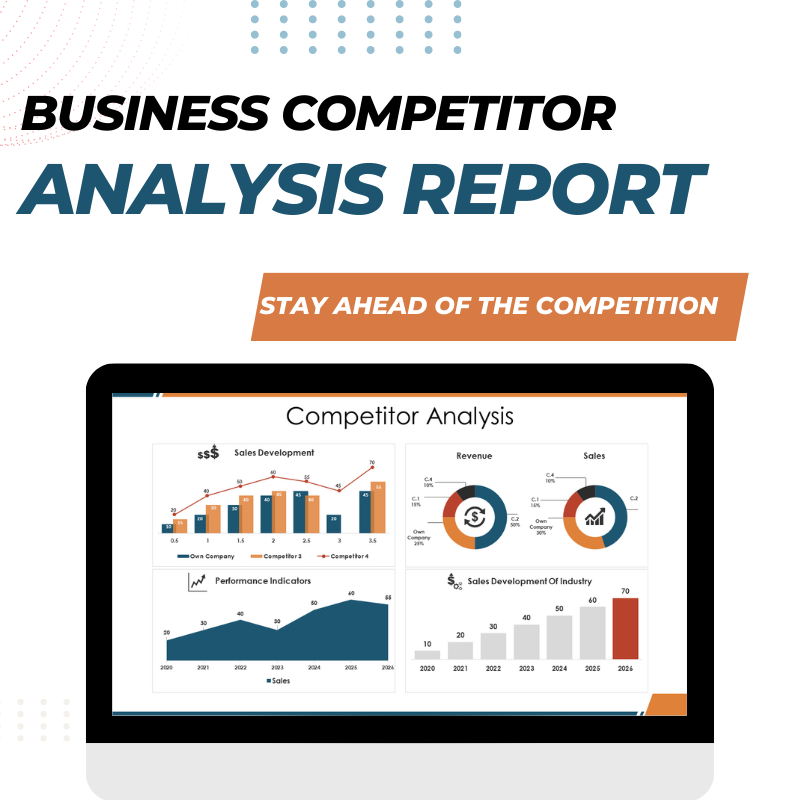
Our marketing strategy service starts with a consultation call and, depending on the package, covers SWOT analysis and strategic positioning, competitor analysis, target audience and buyer personas, goals and KPIs, budget allocation, channels and tools, and an action plan. For a deeper look at rivals, see our business competitor analysis report. Request a quote and tell us about your business and goals.
Frequently asked questions
How long should a small business marketing strategy be?
How often should I update my marketing strategy?
What's the difference between a marketing strategy and a business plan?
Can I write a marketing strategy without a marketing team?
Which marketing channel is best for a B2B small business?
Related services
Related articles
- How to Build an SEO Strategy for a Small Business
A nine-step method to plan SEO around business goals, with a keyword map example, a 90-day starter plan and the practices Google says to avoid.
- What Is a CRM? A Practical Guide for Small Businesses
What a CRM does day to day, how it compares with spreadsheets, ERPs and help desks, and a seven-step plan to choose and roll one out.
Sources
- U.S. Small Business Administration: Marketing and sales (accessed 2026-11-19)
- PR Smith: SOSTAC planning (accessed 2026-11-19)
- WhatsApp Business Messaging Policy (accessed 2026-11-19)